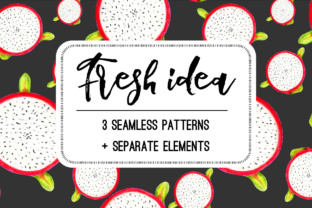
Fresh Idea Patterns Elements: Tropical & Textured
Imagine sketching with colored pencils on softly toothed paper—light strokes, gentle blending, a sense of ease that feels intentional, not rushed. That’s the heartbeat of Fresh Idea Patterns Elements: a thoughtfully crafted collection where dragon fruit, carambola, and watermelon aren’t just fruits—they’re relaxed motifs rendered with tactile warmth and holiday-light energy. No sharp vectors, no sterile gradients. Just organic shapes, subtle texture, and breathing room between elements. It’s design that invites touch, slows the scroll, and quietly signals joy without shouting.
More Than Just Patterns—A Design Language
This isn’t a generic tropical pack. Each seamless pattern was built from hand-drawn elements, then digitally refined to preserve that carefree, analog charm. The textured paper base adds quiet depth—notice how light catches the slight grain in the watermelon rind or softens the edges of the carambola’s star points. Colored pencils lend warmth: muted pinks, buttery yellows, cool greens—not neon, not pastel, but grounded and sun-warmed. That distinction matters. It means your greeting card doesn’t scream “summer sale,” and your boutique t-shirt doesn’t blend into the algorithmic feed. It stands apart because it feels *made*, not generated.
Real-World Flexibility, Layer by Layer
The collection’s structure is built for doing real work—not just browsing thumbnails. You get three core patterns (dragon fruit, carambola, watermelon), each delivered in three essential formats: PSD layered files, high-res JPEGs, and transparent-background PNGs—all at 5000 × 5000 px and 800 dpi. That resolution holds up beautifully on large-format prints like posters or fabric yardage, while the layered PSDs let you adjust color balance, tweak saturation, or mute one element without affecting the rest. Need to soften the dragon fruit’s pink for a baby shower palette? Done in two clicks. Want to isolate just the carambola star shape for a logo mark? The included isolated PNG and PSD files make that instant—no clipping masks, no guesswork.
That dual delivery—patterns *and* isolated elements—unlocks practical versatility. A wedding planner can drop the watermelon pattern onto an invitation suite background, then pull the same fruit as a standalone icon for RSVP cards. A small-batch apparel brand might use the carambola pattern as a lining print inside tote bags, then feature the isolated dragon fruit on a limited-edition enamel pin. Even bloggers and content creators benefit: overlay the transparent-pattern PNGs onto flat-lay photos for Instagram Stories with zero background conflict—or layer them subtly behind text blocks in digital newsletters for visual rhythm without sacrificing legibility.
Where This Collection Earns Its Place
Fresh Idea Patterns Elements thrives where authenticity and approachability matter most. Think artisanal food packaging—its soft textures complement handmade labels and kraft paper better than glossy vector repeats. It fits naturally in editorial design for lifestyle magazines covering slow travel, seasonal cooking, or mindful living. In home decor, it translates effortlessly to throw pillow mockups, ceramic decals, or framed wall art prints—especially when paired with natural materials like linen, rattan, or matte ceramic finishes. For fashion, it works best on relaxed silhouettes: oversized tees, cotton dresses, or woven totes—not sharp tailoring or techwear. The vibe is “I picked this up at a seaside market,” not “I ordered this from a trend report.”
Practical Tips Before You Design
Start by asking: does your project need *rhythm* or *focus*? If it’s a repeating surface—like wrapping paper, notebook covers, or web page backgrounds—the seamless patterns are your foundation. But if you need clarity—say, a festival flyer where hierarchy matters—reach first for the isolated PNGs. Their clean transparency lets you place them precisely against bold typography or solid-color blocks without visual competition.
Test scale early. These patterns read beautifully large, but shrink them too far (below ~15% of full size) and the pencil texture blurs into noise. On t-shirts, aim for pattern repeats no smaller than 3–4 inches across. For social media banners, use the JPEG or PNG at full resolution—then crop tightly to highlight one motif rather than compressing the whole repeat.
Pair intentionally. Because Fresh Idea Patterns Elements carries such a distinct personality, it pairs best with typefaces that respect its quiet confidence—not compete with it. Try a warm, low-contrast sans serif (think Sofia Pro or Circular Std) for body copy. For headlines, a gentle serif with open counters (like Freight Text or Tiempos Headline) adds contrast without formality. Avoid tight, high-contrast fonts or aggressive scripts—they’ll clash with the collection’s easy pace.
Licensing is straightforward: all files are cleared for commercial use, including merchandise, client projects, and digital products. No attribution required, no hidden limits on print runs or sales volume. Just keep the original layered PSDs for your own edits—don’t redistribute them as standalone assets.
Why Designers Keep Coming Back
It’s rare to find a collection that balances specificity and flexibility so well. Fresh Idea Patterns Elements doesn’t try to be everything. It knows its voice: warm, unhurried, botanical-but-not-botanical-illustration, joyful-but-not-cloying. That focus makes decision-making faster. When you’re juggling five client revisions and a tight deadline, knowing exactly *how* a pattern will behave on fabric versus foil-stamped stationery saves hours. And because every file is consistent in resolution, naming, and layer logic, swapping assets between projects feels intuitive—not like decoding a new system each time.
Whether you’re designing a single Etsy listing or building a full brand identity for a coastal café, Fresh Idea Patterns Elements gives you texture with intention, color with calm, and repetition with personality. It’s not just another download. It’s a reliable, tactile tool—one that reminds you why you started creating in the first place.