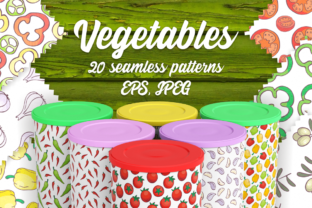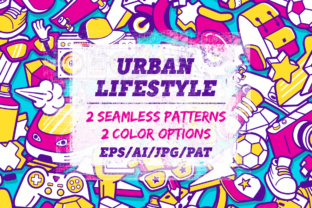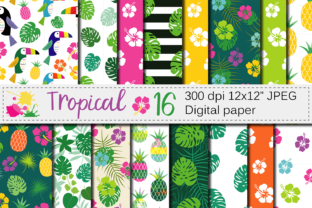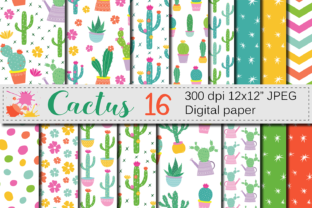
Set of Doodle Style Seamless Patterns
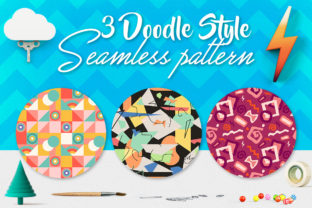
Doodle style seamless patterns offer a distinctive blend of hand-drawn charm and functional repetition—ideal for designers who want organic energy without sacrificing technical reliability. Unlike rigid geometric repeats or photorealistic textures, doodle patterns introduce whimsy, movement, and approachability while maintaining clean tiling behavior across surfaces. The Set of Doodle Style Seamless Patterns delivers this balance in three cohesive yet distinct visual directions—each built with intention, consistency, and real-world usability in mind.
What Makes This Set Structurally Different
This isn’t a collection of isolated clipart motifs stitched into repeats. Each of the three pattern sets is designed as a unified system: shapes interlock thoughtfully, spacing supports readability at multiple scales, and line weights remain consistent within each group. You receive both vector (EPS10) and high-resolution raster (JPG, 4000px) files—meaning you can scale infinitely for large-format textile printing or drop cleanly into web-based mockups without pixelation.
The three included styles vary in shape language—not just aesthetics, but structural logic:
- Loopy & Connected: Interwoven circles, spirals, and looping vines that flow continuously across the repeat boundary—ideal for backgrounds where motion and rhythm matter.
- Geometric-Doodle Hybrid: Triangles, hexagons, and stepped lines softened with sketchy outlines and slight asymmetry—bridging precision and playfulness for packaging or stationery.
- Freeform Object Cluster: Loosely grouped icons like stars, clouds, arrows, and abstract blobs arranged to imply casual arrangement, not strict symmetry—well-suited for scrapbooking, printed paper goods, or handmade craft labels.
Each set maintains a shared color-agnostic foundation—lines are crisp black or grayscale, allowing effortless recoloring in design software. That flexibility matters whether you’re prepping for CMYK fabric printing or applying a duotone overlay for digital branding.
How It Compares to Other Pattern Options
Many designers begin by searching for “seamless patterns” broadly—and quickly encounter tradeoffs. Free online libraries often provide single-pattern downloads in low-res JPG or PNG, with no vector source or licensing clarity. Premium marketplaces may offer larger bundles, but those frequently mix styles haphazardly, making it hard to maintain visual cohesion across a project.
In contrast, the Set of Doodle Style Seamless Patterns prioritizes internal consistency over volume. You’re not getting 50 loosely related doodles—you’re getting three tightly edited systems, each with its own repeat logic, density, and spatial rhythm. That makes it easier to match pattern behavior to your medium: tighter loops hold up on narrow ribbons; looser clusters breathe better on large wall murals.
Compared to custom illustration work, this set offers immediacy and cost efficiency—no back-and-forth rounds of revision, no waiting for delivery. But it doesn’t replace bespoke development when brand-specific iconography or narrative-driven motifs are required. Think of it as a refined starting point, not a final destination.
Where These Patterns Excel—And Where They Don’t
The Set of Doodle Style Seamless Patterns performs especially well in contexts where warmth, accessibility, and subtle texture are assets—not distractions.
For surface and textile design, the EPS files allow direct import into Adobe Illustrator or Affinity Designer for repeat swatch creation. Designers report success scaling the Loopy & Connected set for cotton tote bags (where stitch definition benefits from clear line continuity) and using the Freeform Object Cluster on kraft paper gift wrap (where irregular spacing mimics hand-stamping).
In packaging, the Geometric-Doodle Hybrid set stands out because its underlying structure reads as intentional—even at small sizes—while still feeling friendly. One product designer used it as a secondary background layer beneath transparent product windows on eco-friendly soap boxes, letting the pattern suggest craftsmanship without competing with typography.
However, these patterns aren’t optimized for ultra-minimalist or corporate environments where restraint and neutrality are priorities. If your brand guidelines require strict monoline weight, zero variation in stroke, or absolute symmetry, the intentional imperfections of doodle styling may require manual cleanup—or point you toward a more rigid pattern library.
Similarly, while the 4000px JPGs are sufficient for most screen-based use and mid-size prints, they won’t substitute for custom-engineered tiles intended for billboard-scale murals or embroidery digitizing, where stitch count and thread path optimization demand deeper technical control.
Realistic Use Cases and Practical Integration
Because the files are delivered in two universally supported formats, integration varies little across tools—but workflow does depend on your end goal.
For fabric printing: Import the EPS into Illustrator, define a pattern swatch, then test tile alignment using the Transform panel before exporting for print prep. The vector nature ensures sharp edges even after resizing for yardage calculations.
For digital backdrops or website headers: Drop the 4000px JPG directly into Figma or Photoshop. Use blending modes (like Multiply or Overlay) to adjust contrast against background colors—especially effective with the Freeform Object Cluster’s varied density.
For scrapbooking or printable paper goods: Open the JPG in Canva or Affinity Publisher, apply a subtle noise filter or grain overlay to mimic tactile paper, then export as PDF/X-4 for professional printing. The doodle aesthetic pairs naturally with matte finishes and soy-based inks.
One educator used the Loopy & Connected set to create classroom posters—scaling individual motifs from the repeat to serve as bullet points and section dividers. Because the EPS preserves paths, she extracted and recolored elements without quality loss—something not possible with flattened JPG-only resources.
Decision Factors: When to Choose This Set
Consider the Set of Doodle Style Seamless Patterns if you value:
- Cohesion over quantity: You need three reliable, stylistically distinct options—not 30 inconsistent ones.
- Format versatility: You regularly move between vector-based production (textiles, signage) and raster-based applications (web, social, print-on-demand).
- Time-sensitive iteration: You’re prototyping fast, pitching concepts, or building a mood board where authenticity and speed both matter.
- Handmade or artisan positioning: Your audience responds to human-made cues—slight variation, visible line quality, and non-mechanical rhythm.
Look elsewhere if:
- You require full commercial license coverage for resale of derivative digital products (e.g., selling editable Canva templates that include these patterns), as standard licenses typically restrict redistribution of unaltered assets.
- Your project demands multi-color registration marks, Pantone-specific builds, or specialized file outputs like .PLT for cutting plotters—none of which are included here.
- You’re committed to a strictly monochrome, ultra-thin line aesthetic—these patterns use expressive, variable-weight strokes by design.
Final Perspective
The Set of Doodle Style Seamless Patterns occupies a thoughtful middle ground: more considered than generic pattern packs, more accessible than commissioning original artwork. Its strength lies not in novelty for novelty’s sake, but in how deliberately each set balances repetition with variation, structure with looseness, and scalability with character.
It won’t solve every pattern need—but for designers working across physical and digital touchpoints, where tone and texture carry meaning, it provides a grounded, adaptable foundation. Whether you're developing a new stationery line, designing reusable shopping bags, or building a cohesive brand toolkit for a small business, having three coherent, technically sound doodle-based systems saves time, reduces visual guesswork, and keeps the focus where it belongs: on what you’re making—not just the pattern behind it.