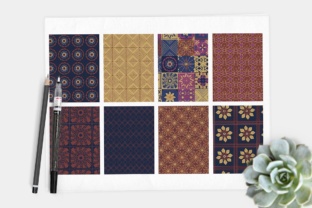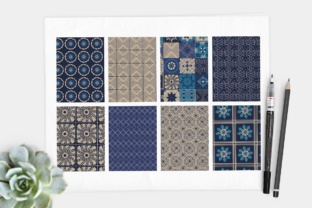
Souk Inspired Mosaic Tile Seamless Patterns - Blue
Thoughtful visual design isn’t about decoration—it’s about intention. When you choose Souk Inspired Mosaic Tile Seamless Patterns - Blue, you’re selecting more than a set of eight 12x12 inch, 300dpi JPEG files. You’re choosing a cohesive, hand-drawn visual language rooted in artisanal geometry, cultural resonance, and functional flexibility. These patterns don’t compete for attention—they support it. They’re designed to elevate stationary, invitations, blog headers, digital scrapbooking layouts, and brand collateral without overwhelming the message or diluting clarity.
Why Coherence Matters More Than Complexity
In branding and communication, consistency compounds. A single pattern used haphazardly across platforms creates visual noise. But Souk Inspired Mosaic Tile Seamless Patterns - Blue is built as a coordinated collection—not eight isolated designs, but eight interlocking expressions of one aesthetic logic. Each tile repeats seamlessly, yes—but more importantly, each shares proportion, line weight, negative space rhythm, and chromatic restraint. That shared foundation means you can switch between patterns across different touchpoints (e.g., email headers, printable planners, social media banners) while preserving tonal continuity. For entrepreneurs launching a new product line or educators designing course materials, that coherence reduces cognitive load—for you and your audience.
Strategic Use Cases: Where Intention Meets Application
Consider how these patterns operate in real-world contexts—not as “pretty backgrounds,” but as deliberate tools:
- Digital scrapbooking and planner design: Because each pattern is 12x12 at 300dpi, it scales cleanly for print-ready PDFs or high-res digital pages. Use lighter variants for subtle page dividers; bolder iterations for section headers—always maintaining legibility over the motif.
- Invitations and event branding: Weddings, workshops, or cultural celebrations benefit from motifs that signal craft and authenticity. The souk-inspired geometry conveys warmth and tradition without leaning into cliché—especially when paired with restrained typography and ample white space.
- Blog and newsletter visuals: Rather than defaulting to stock photography or generic gradients, embed these patterns into article headers, sidebar accents, or downloadables (e.g., checklists, resource guides). The result feels curated—not algorithmic.
- Small business stationery: Letterheads, invoice footers, or thank-you cards gain distinction when grounded in a consistent, tactile-feeling visual system. These patterns lend sophistication without requiring custom illustration.
What to Consider Before You Apply
Not every project benefits from ornamental patterning—and that’s by design. Before reaching for Souk Inspired Mosaic Tile Seamless Patterns - Blue, ask three questions:
- Does this serve a functional purpose—or just fill space? If the pattern obscures text, competes with data visualizations, or distracts from a call-to-action, reduce opacity, switch to a lower-contrast variant, or use it only as a subtle border element.
- Is the context culturally aligned? Souk-inspired motifs carry quiet associations—artisanal trade, regional craftsmanship, layered history. They resonate strongly in wellness, education, hospitality, or creative industries—but may feel misaligned in highly technical, corporate, or minimalist B2B contexts unless carefully framed.
- Do I have control over output resolution and color fidelity? These are JPEGs—not vector files. They perform best at their native 12x12 size or scaled proportionally. Avoid extreme stretching or heavy compression in web exports. For print, always embed in CMYK workflows with proper bleed handling.
Avoiding the “Decorative Trap”
The biggest risk with any seamless pattern set—including Souk Inspired Mosaic Tile Seamless Patterns - Blue—is using it as visual wallpaper rather than strategic punctuation. Random application leads to fatigue: readers stop seeing the motif and start sensing clutter. Worse, inconsistent usage (e.g., switching between four different patterns across one email sequence) signals indecision—not creativity.
Instead, treat the set like a limited palette. Choose one primary pattern for your core identity elements (e.g., website header, logo lockup background), then reserve two secondary patterns for variation—say, one for downloadable resources and another for seasonal campaigns. This approach builds recognition over time. It also makes future updates scalable: if you later add a ninth pattern, it won’t disrupt established expectations.
Planning for Long-Term Visual Consistency
Visual systems evolve—but they shouldn’t reset. When integrating Souk Inspired Mosaic Tile Seamless Patterns - Blue into longer-term work, map usage against your content calendar and brand roadmap. For example:
- If you publish monthly newsletters, assign Pattern #3 to Q1 themes (renewal, planning), Pattern #6 to Q2 (growth, connection), and rotate deliberately—not arbitrarily.
- If you design client-facing templates (e.g., proposal decks, onboarding kits), build pattern usage into your style guide—not as an afterthought, but as a defined layer alongside type hierarchy and iconography.
- When collaborating with designers or contractors, share not just the files—but your intent. Include notes like: “Pattern #1 used for all primary headers; avoid overlapping with body text smaller than 14pt.” Clarity here prevents rework and preserves voice.
How It Supports Decision-Making—Not Just Design
This may seem like a design asset—but its real value lies in reducing decision fatigue. Every time you open a blank document and wonder, “What background should I use?” you lose focus, momentum, and mental bandwidth. Souk Inspired Mosaic Tile Seamless Patterns - Blue offers a bounded set of high-quality, pre-vetted options. That constraint isn’t limiting—it’s liberating. It lets you invest energy where it matters most: refining messaging, structuring information, or anticipating user needs.
For freelancers managing multiple clients, having a go-to pattern system means faster turnaround without sacrificing polish. For educators building lesson materials, it means spending less time sourcing images and more time aligning content with learning outcomes. For small business owners handling their own marketing, it means avoiding the trap of endless tweaking—because the foundation is already resolved.
Realistic Expectations and Practical Boundaries
These patterns excel where subtlety, cohesion, and cultural nuance matter—but they aren’t universal. They won’t solve poor layout structure, weak copy, or mismatched color theory elsewhere in your design. They also require thoughtful pairing: avoid stacking them with busy fonts, dense icon sets, or competing textures. Their strength is in breathing room—not density.
They’re also JPEG-based, so editing flexibility is limited. You can adjust levels, crop, or layer with transparency—but you cannot recolor individual tiles or isolate elements without significant manual work. That’s not a flaw; it’s a boundary. Knowing it helps you plan realistically: if you need full color control or SVG scalability, pair this set with complementary vector assets—or reserve it for contexts where its fixed form delivers maximum impact.
Moving Beyond Aesthetics to Alignment
Ultimately, Souk Inspired Mosaic Tile Seamless Patterns - Blue functions best when treated as part of a larger alignment strategy—not just a visual choice, but a reflection of values. Does your work emphasize craft? Cultural respect? Thoughtful detail? Then these patterns reinforce that stance—not through loudness, but through quiet consistency.
That alignment pays dividends over time. Clients remember how your materials felt—not just what they said. Learners retain information better when presented within calm, intentional environments. Readers trust sources that demonstrate care in execution. None of that happens by accident. It happens when every visual decision—from font selection to pattern application—is filtered through purpose.
So before you open that first JPEG: pause. Ask not just *what* it is, but *why* it fits—and whether it serves something deeper than surface appeal. That discipline transforms a simple tile set into a quiet lever for clarity, credibility, and connection.