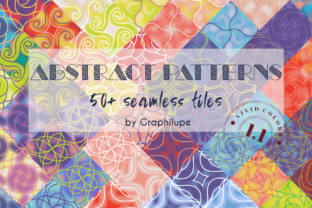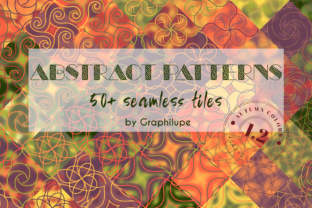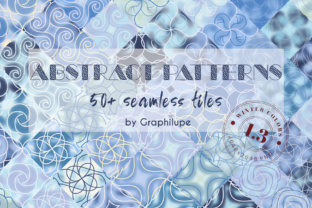
Abstract Patterns Winter Edition: A Strategic Design Resource for Purpose-Driven Creators
Abstract Patterns Winter Edition is not just another seasonal asset pack—it’s a curated, production-ready toolkit designed for professionals who prioritize intentionality over ornamentation. Comprising 56 seamless, high-resolution PNG files (2048×2048 pixels, 300 dpi, 6.82”×6.82”), this collection delivers consistent color fidelity, predictable tiling behavior, and immediate compatibility with both digital and print workflows. Each pattern is delivered in RGB—optimized for screen use—but includes straightforward conversion paths to CMYK via Photoshop’s color profile system. The absence of transparency isn’t a limitation; it reflects a deliberate choice for lossless compression and reliable rendering across platforms, from Adobe Illustrator to Shopify theme editors.
Why Context Matters More Than Color Palettes
Seasonal design assets often get misused as decorative afterthoughts—slapped onto social posts or packaging without aligning with brand strategy or audience expectations. Abstract Patterns Winter Edition avoids that trap by offering visual language that supports meaning, not just mood. Its winter palette—think deep indigos, frosted teals, warm charcoal grays, and muted terracottas—doesn’t evoke clichéd snowflakes or holiday cheer. Instead, it suggests stillness, clarity, grounded innovation, and quiet confidence. That makes it especially valuable for brands positioning themselves for Q1 planning cycles, educational product launches, or service rebranding efforts that benefit from a sense of renewal without overt seasonality.
Strategic Use Cases Across Real Workflows
When applied with purpose, Abstract Patterns Winter Edition strengthens execution across multiple domains—not because it’s “trendy,” but because it solves tangible problems:
- Product design: Use seamless tiles to prototype textile swatches, phone case mockups, or ceramic glaze concepts—without needing custom illustration or licensing concerns.
- Branding & packaging: Apply patterns to secondary packaging elements (inner sleeves, tissue paper, gift tags) to reinforce tactile brand memory without overwhelming primary messaging.
- Digital interfaces: Integrate subtle background textures into dashboard UIs or email headers to add depth while preserving readability and accessibility contrast ratios.
- Print collateral: Leverage the 300 dpi resolution for letterpress invitations, limited-run posters, or branded stationery where texture and consistency matter more than photographic realism.
- Educational materials: Design workshop handouts or online course worksheets with differentiated section backgrounds—using pattern variation to signal content shifts rather than relying solely on color or font weight.
Planning Your Implementation—Not Just Picking a Pattern
Start with your outcome—not your aesthetic preference. Ask: What action do I want the viewer to take? What emotion or association should linger after interaction? If you’re launching a sustainability report, a low-contrast geometric tile in slate and oat tones may communicate integrity and restraint more effectively than a vibrant, high-saturation motif. If you’re designing apparel for a cold-weather outdoor brand, consider how the pattern behaves at scale on fabric—test repeat alignment in garment mockups before finalizing. Because all 56 patterns are seamless and uniform in dimension, they scale predictably—but their psychological impact depends entirely on how you pair them with typography, whitespace, and hierarchy.
What to Consider Before You Import
Before dropping a pattern into your project, assess three practical constraints:
- Output medium: While RGB-to-CMYK conversion is simple in Photoshop, always soft-proof using your printer’s ICC profile—not just the default U.S. Web Coated (SWOP) preset. Some cooler winter tones shift noticeably in print; previewing prevents costly reprints.
- File handling: PNGs are ideal for web and editing flexibility, but avoid embedding them directly into PDFs intended for commercial print unless flattened and converted. For large-format printing (e.g., banners), confirm with your vendor whether native PNG support is available—or convert to TIFF with LZW compression for maximum compatibility.
- Brand continuity: Don’t treat Abstract Patterns Winter Edition as a standalone solution. Audit your existing visual system first. Does this collection extend your current palette—or introduce dissonance? One effective method: overlay a pattern sample at 10% opacity over your logo lockup. If legibility or emotional resonance suffers, reconsider placement or opacity.
Risks of Using Without Strategic Anchoring
The biggest risk isn’t technical—it’s conceptual drift. When designers select patterns based solely on personal taste or fleeting inspiration, they inadvertently dilute message cohesion. A bold, asymmetric winter pattern might energize a tech startup’s pitch deck—but undermine trust if used on a financial advisor’s client onboarding guide. Similarly, applying multiple patterns across touchpoints without clear rules (e.g., “geometric = digital assets, organic = print”) creates visual noise rather than narrative flow. Abstract Patterns Winter Edition gives you flexibility; it doesn’t relieve you of the responsibility to define *why* and *where* each pattern earns its place.
Long-Term Value Beyond the Season
“Winter Edition” may suggest time-bound relevance—but these patterns were built for longevity. Their abstraction avoids literal seasonal signifiers (no snowmen, pine boughs, or mittens), making them adaptable beyond December–February. In fact, many users repurpose them year-round: as neutral-yet-distinctive backdrops for podcast cover art, as subtle textures in SaaS onboarding flows, or as unifying elements across multi-phase campaign assets. The real long-term value lies in how consistently they perform—across tools, outputs, and audiences—when guided by clear creative intent.
Decision-Making Guidance for Practical Adoption
If you’re evaluating whether Abstract Patterns Winter Edition fits your current priorities, ask yourself:
- Do I need production-ready assets that reduce time spent on texture creation or licensing research?
- Am I preparing for a launch, rebrand, or campaign where visual cohesion across physical and digital touchpoints matters?
- Do my current design systems lack scalable, non-photographic texture options that work equally well on screen and in print?
- Is there a gap between how my brand wants to be perceived (e.g., thoughtful, resilient, forward-looking) and how it currently appears?
If two or more answers are yes, then Abstract Patterns Winter Edition isn’t an embellishment—it’s infrastructure. It supports decisions about tone, pacing, and emphasis without demanding new skill sets or software. You don’t need to become a pattern designer to benefit from it. You only need to decide what role texture plays in your communication—and then choose deliberately.
Final Thought: Texture as Intention, Not Decoration
Great design rarely shouts. It guides—quietly, consistently, and with precision. Abstract Patterns Winter Edition functions best when treated not as decoration, but as a calibrated tool: one that reinforces structure, signals transition, or adds tactile credibility where flat color falls short. Whether you’re a small business owner refining your Shopify theme, a marketer building Q1 campaign assets, or an educator designing interactive learning modules, the patterns you choose say something about your standards—even before a single word is read. Choose with purpose. Implement with discipline. Let the abstraction serve your goals—not distract from them.