Mermaid Patterns: Elegant Scale-Inspired Design Assets
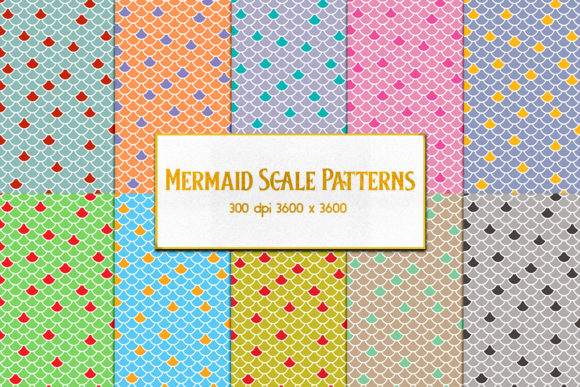
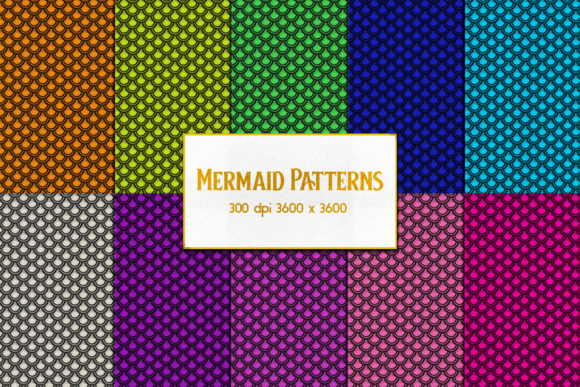
If you've ever paused mid-scroll on a beautifully textured social post, admired the subtle shimmer in a boutique packaging design, or felt drawn to the quiet sophistication of a literary magazine’s masthead—you’ve likely responded to the same visual language Mermaid Patterns embodies. It’s not a font. It’s a set of 14 meticulously crafted mermaid scale patterns, delivered at 3600px width and crisp 300 DPI resolution—designed for real creative work, not just inspiration boards.
What Makes These Patterns Distinctly “Mermaid”?
These aren’t generic water motifs or cartoonish fins. Each pattern captures the organic rhythm of overlapping scales: soft gradients, gentle directional flow, and delicate edge variation that mimics how light catches iridescent skin underwater. Some lean minimalist—tight, uniform tessellations ideal for subtle backgrounds in editorial layouts. Others embrace asymmetry and texture—looser arrangements with slight opacity shifts, perfect for adding tactile depth to product labels or Instagram story overlays.
The personality is calm but intentional: quietly luxurious, nature-rooted but modern, feminine without being stereotyped. They avoid cliché seashell borders or overused aqua palettes. Instead, they offer tonal versatility—work equally well in charcoal and cream, deep indigo and parchment, or even monochrome black-and-white for high-contrast branding.
Where These Patterns Earn Their Keep
Designers reach for Mermaid Patterns when they need visual cohesion *without* repeating a logo or relying solely on color. Think of them as silent brand amplifiers:
- Packaging design: A soft scale repeat along the bottom third of a candle box adds craft credibility without overwhelming the typography.
- Editorial design: Used as a full-bleed background behind pull quotes in a wellness magazine—subtle enough to preserve readability, distinctive enough to reinforce tone.
- Social media graphics: Layered at 8–12% opacity beneath bold sans serif headlines on Pinterest pins or LinkedIn carousels—adds dimension without competing for attention.
- Web design: As SVG-ready background textures behind hero sections (especially in CSS with
background-size: cover), scaling cleanly across devices thanks to their high-res raster foundation. - Print collateral: Because they’re 300 DPI and 3600px wide, they hold up flawlessly on business cards, letterhead, and presentation decks—even when cropped tightly or printed on textured stock.
They’re especially effective in niches where authenticity and sensory appeal matter: natural skincare brands, indie book publishers, coastal hospitality businesses, mindfulness apps, and artisanal food producers. In each case, the pattern doesn’t shout—it whispers continuity, care, and considered detail.
Readability, Hierarchy, and the Quiet Power of Texture
Unlike busy florals or aggressive geometrics, Mermaid Patterns support—not sabotage—readability. Their low-contrast tonal shifts and consistent directionality guide the eye *around* text rather than through it. When placed behind body copy, use them at 5–7% opacity or apply a subtle Gaussian blur (1–2px) in your editing software to soften edges further.
For visual hierarchy, pair them intentionally: a strong, clean sans serif headline over a medium-opacity scale background creates immediate contrast. The pattern becomes atmospheric context; the type remains authoritative. That balance strengthens brand perception—it signals professionalism *and* personality, consistency *and* nuance.
Audience engagement isn’t just about color or motion. It’s about texture that invites pause. A visitor scrolling past a website banner might not register “mermaid scale,” but they’ll register *calm*, *craft*, and *intention*. That micro-impression builds recognition faster than a flashy animation ever could.
Practical Tips Before You Drop Them Into Your Project
Start by evaluating fit—not just aesthetics, but function:
- Test scale and crop early. At 3600px, these patterns tile seamlessly—but only if your layout dimensions align. Drop one into your design file at 100% size, then zoom to actual pixels. Does the repetition feel too tight or too sparse at your intended usage? Adjust opacity or layer multiple patterns lightly for richer depth.
- Check contrast against your type palette. Run a quick luminosity test: convert your background + overlay text to grayscale. Is there at least a 4.5:1 contrast ratio for body copy? If not, lighten the pattern or darken your text—not both.
- Review commercial licensing clearly. These are premium design assets—not free downloads. Ensure your license covers your use case: client work, SaaS dashboard backgrounds, print runs over 500 units, or merchandise production. Most reputable sellers clarify usage tiers upfront; don’t assume “personal use” extends to your Etsy shop banners.
- Pair thoughtfully—not decoratively. Avoid stacking Mermaid Patterns with other organic textures (e.g., linen, marble, leaf veins) unless you’re deliberately building layered complexity. One subtle texture, done well, carries more weight than three competing ones.
- Consider output context. For web, save optimized PNGs (not JPEGs) to preserve transparency and edge fidelity. For large-format print, embed the full-resolution TIFF or PSD version directly into your InDesign or Illustrator file—don’t scale up from a compressed preview.
One final note: Mermaid Patterns shine brightest when used with restraint. A single, well-placed application—a watermark-style corner motif on a PDF pitch deck, a delicate border on a newsletter divider, a textured backdrop for a limited-edition ebook cover—does more for brand identity than blanket coverage ever could.
Real Work, Not Just Pretty Pixels
These aren’t “filler” graphics. They’re design decisions with weight. When a small-batch soap maker uses one pattern consistently across their Instagram grid, product tags, and wholesale catalog, customers begin to associate that quiet shimmer with trust and craftsmanship. When a freelance editor uses a scaled-down version as a subtle divider between chapters in a client’s memoir, it adds emotional resonance—not decoration.
Mermaid Patterns belong in the toolkit of anyone who treats texture as meaning, not just ornament. They reward attention to detail, respect audience intelligence, and elevate work without demanding center stage. That’s not just good design. It’s responsible design.