Country Road Patterns: Rustic Charm, Modern Versatility
Close your eyes for a moment. Picture sun-warmed timber floors, linen curtains fluttering in a soft breeze, wildflowers spilling from mason jars on a farmhouse table. That quiet, grounded feeling—the kind you get wandering down a country lane with people you love—is woven right into Country Road Patterns. It’s not just a design collection; it’s a tactile invitation to slow down, create intentionally, and bring warmth into everyday projects—whether you’re stitching a quilt at home or designing a boutique brand identity.
What Exactly Is Country Road Patterns?
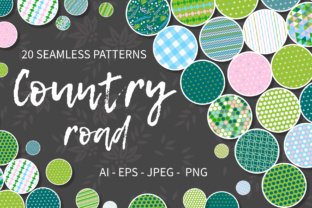
Country Road Patterns is a curated set of 20 seamless, nature-inspired motifs—think hand-drawn wheat stalks, subtle gingham overlays, delicate ferns, faded checkers, and gentle floral sprigs—all designed with authenticity and versatility in mind. Each pattern comes in four editable, production-ready formats: EPS (for vector precision), AI (for Illustrator users), JPEG (for quick digital use), and PNG (with transparent backgrounds). A well-organized catalogue helps you locate files instantly, and the included color palette ensures visual harmony across projects. The bonus patchwork-style pattern adds extra depth for textile-focused work—especially useful if you're planning quilting fabric or layered paper crafts.
Why This Collection Fits So Many Kinds of Makers
Different people reach for Country Road Patterns for different reasons—and that’s by design. What matters most depends on who you are, what you’re making, and how much time or technical confidence you have.
For Beginners & Hobbyists
If you’ve just started exploring digital design—or even if you mostly sew, scrapbook, or host handmade gatherings—Country Road Patterns meets you where you are. You don’t need advanced software to begin: the JPEG and PNG files drop straight into Canva, PowerPoint, or Cricut Design Space. Try printing a few patterns onto kraft paper for rustic gift tags, or layer them behind handwritten menu cards for a backyard picnic. The simplicity of the motifs means they won’t overwhelm your layout—and because they’re seamless, scaling them up for wall decals or down for notebook covers feels intuitive, not intimidating.
For Quilters & Textile Artists
Quilters especially appreciate how these patterns echo traditional rural aesthetics while avoiding cliché. The EPS and AI files let you adjust repeat spacing, rotate motifs, or recolor threads before sending to a fabric printer. One maker recently used the “Haystack Stripe” pattern to design custom backing fabric for a baby quilt—then repurposed the same file as a border motif in her embroidery software. That kind of cross-medium flexibility saves hours and deepens creative flow.
For Small Business Owners & Brand Creators
Local bakeries, flower shops, and cottage-core subscription boxes often need cohesive, warm visuals that feel personal—not stock-photo generic. With Country Road Patterns, you can build consistent stationery suites (thank-you cards, receipt stamps, packaging inserts) without hiring a designer every time. A wedding planner used the “Linen Weave” pattern as a subtle background for digital invitations and then printed it onto cotton ribbon for favor wraps—same source file, two distinct applications, zero licensing ambiguity.
For Educators & Workshop Leaders
Teachers using visual literacy or craft-based learning find these patterns valuable for low-prep, high-engagement activities. One primary art educator printed the PNG files onto cardstock, cut them into tiles, and had students rearrange them to explore symmetry and rhythm. Another used the color palette as a springboard for lessons on mood and tone in visual communication—how warm ochres and muted sage greens evoke calm differently than bright primaries.
What Really Matters When You Choose a Pattern Set
It’s not just about how pretty the designs look—it’s about how well they serve your real-world workflow. Here’s how priorities shift across use cases:
- Ease of use: Beginners value clear naming, instant transparency (PNG), and compatibility with free or widely available tools.
- Quality & scalability: Print-on-demand sellers and fabric designers rely on crisp vector files that hold detail at any size—no pixelation, no surprises.
- Commercial reliability: Entrepreneurs need explicit, straightforward licensing—no hidden restrictions on merchandise, digital products, or client work.
- Creative flexibility: Artists want room to reinterpret—not just copy-paste. The subtle imperfections and organic line weights in Country Road Patterns encourage adaptation, not rigid repetition.
- Long-term usefulness: Unlike trend-driven graphics, these motifs age gracefully. You’ll still reach for them five years from now when updating your portfolio or rebranding a seasonal product line.
Real Projects, Real Tools
You don’t need expensive software to get started. Here’s how different people actually use these files:
- A freelance illustrator imported the AI wheat pattern into Procreate, traced over it with textured brushes, and turned it into a custom brush set for client illustrations.
- A homeschool parent printed the JPEG “Wildflower Scatter” onto sticker paper, cut out individual blooms, and used them for nature journaling prompts.
- A stationery shop owner combined the “Faded Gingham” PNG with hand-lettered text in Photoshop to create limited-edition greeting cards—then reused the same file as a watermark on social media posts.
- A university textiles lecturer loaded the EPS files into Adobe Dimension to simulate how each pattern would drape and fold on 3D garment mockups—helping students visualize scale and proportion before cutting fabric.
Does Country Road Patterns Fit Your Next Step?
Ask yourself: Do you want to make something that feels handmade but looks polished? Are you tired of hunting for assets that either lack character or lock you into rigid templates? If your answer leans toward “yes,” this collection likely aligns with your values—not just your software. It respects your time (no fiddling with misaligned repeats), honors your creativity (room to adapt, not just apply), and supports your goals whether you’re launching a side hustle, teaching a class, or simply making your home feel more like *you*.
There’s no single “right” way to use Country Road Patterns. Some people start with the catalogue and browse by mood. Others go straight to the color palette to match an existing project. A few open the bonus patchwork file first—just to see how the lines interact at different scales. However you begin, what matters is that it feels like a tool, not a constraint. Warm, grounded, quietly thoughtful—and ready when you are.