Mosaic Patterns: Timeless Texture, Modern Versatility
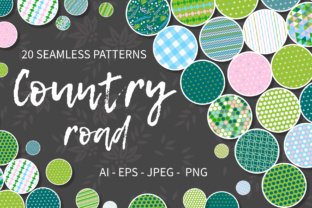
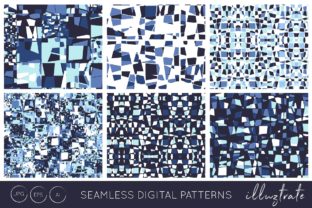
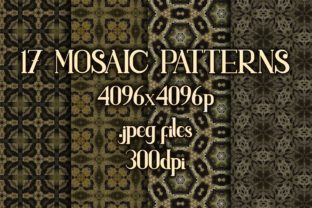
When you need a background that feels both grounded and expressive—something that adds depth without shouting—Mosaic Patterns delivers with quiet confidence. These aren’t just repeating tiles or geometric abstractions. They’re carefully composed textures: subtle interplays of tone, scale, and rhythm that echo hand-laid stone, artisan tilework, woven textiles, and even weathered plaster. Each pattern balances organic irregularity with intentional structure—so they feel human-made, not algorithmically generated.
The 17 included images (4096 × 4096 px, 300 dpi, JPEG) offer real working resolution—not just “high-res” in name only. At 16–24 MB each, they retain rich tonal gradation and fine detail, whether printed at poster size or scaled down for web overlays. That fidelity matters: zoom in on a corner, and you’ll see nuanced transitions—not banding, not pixelation, not flat repetition. This is texture you can trust across mediums.
Where These Patterns Earn Their Keep
Mosaic Patterns thrive where visual cohesion meets tactile suggestion. Think of them as silent collaborators—not the star of the show, but the stage, lighting, and atmosphere all at once.
- Branding & packaging design: Used as subtle backgrounds behind product photography or logo lockups, they add warmth and craft to premium skincare, ceramics, artisan food, or boutique apparel. A soft mosaic under a minimalist label doesn’t compete—it elevates.
- Editorial & publishing: In magazine spreads or long-form digital articles, these patterns work beautifully as section dividers, chapter openers, or full-bleed headers. They ground typographic hierarchy without overwhelming body text.
- Social media & digital assets: Because they’re high-resolution yet JPEG-optimized, they scale cleanly across Instagram carousels, Pinterest pins, and email headers—even when cropped or overlaid with semi-transparent text blocks.
- Print collateral: Business cards, letterhead, presentation decks—they hold up in CMYK conversion and maintain subtlety on coated and uncoated stocks. No ink flooding, no loss of nuance.
- Personal & craft projects: From custom wedding stationery to handmade journal covers or fabric print mockups, these patterns lend authenticity without requiring design expertise.
What Makes Them Work—Beyond Aesthetics
It’s easy to call something “versatile.” What makes Mosaic Patterns genuinely adaptable is how they interact with other design elements—not just what they look like alone.
Take readability: because contrast is intentionally restrained (no stark black-on-white jumps), they rarely interfere with overlaid typography—even at small sizes. You can safely place light or dark type directly over most tiles if you use a modest opacity or soft drop shadow. That’s rare in decorative backgrounds.
They also support visual hierarchy by quietly receding. Unlike bold geometric repeats or loud gradients, these patterns don’t pull attention *away* from primary content—they frame it. In a brand identity system, that means consistency across touchpoints: same background texture used on a website banner, a trade show backdrop, and a product tag feels intentional, not repetitive.
And because each image is unique—not variations of one base tile—they avoid the “wallpaper fatigue” common in low-diversity pattern sets. Flip between them, and you’ll notice shifts in grain density, directional flow, and tonal weight. That variety gives you room to match mood: a tighter, more uniform mosaic for precision-focused tech clients; a looser, more fragmented one for creative studios or wellness brands.
Practical Tips Before You Use Them
Start by asking: Is this background supporting, enhancing, or competing? If your layout already has strong color blocking, layered illustrations, or dense imagery, lean toward the lighter, airier mosaics in the set. If your composition is minimal—say, centered type on white—you can afford richer, higher-contrast tiles.
Test early in context. Drop a mosaic into your actual layout—not just a blank canvas. See how it behaves behind your headline font, your CTA button, your product photo. Adjust opacity (often 5–15% works well) or add a subtle gradient overlay to ensure legibility stays intact.
Don’t overlook licensing. These are commercial-use assets—meaning you can use them in client work, sell products featuring them (like printed notebooks or merch), and include them in templates you distribute. Just keep the archive intact and don’t resell the individual JPEGs as standalone stock.
And remember: resolution isn’t just about printing big. That 4096 × 4096 px size means you can crop tightly for social avatars or extract details for iconography—without losing fidelity. One mosaic might serve as a full-page background in a pitch deck and later become the subtle texture inside a favicon-sized badge.
Pairing With Intention
Mosaic Patterns pair best with typefaces that respect their quiet complexity. Avoid overly ornate scripts or hyper-modern sans serifs with extreme contrast—they either clash or flatten the texture’s nuance.
Instead, try:
- A warm, slightly rounded sans serif (like Poppins or Sofia Pro) for modern brands—clean enough to let the mosaic breathe, friendly enough to match its handmade feel.
- A sturdy, low-contrast serif (think Lora or Merriweather) for editorial or heritage-focused projects—its gentle stroke variation echoes the mosaic’s tonal shifts.
- Even a restrained monospace (like IBM Plex Mono) for tech or creative agency uses—its rigidity creates an elegant tension with the organic pattern.
The goal isn’t “matching” but dialogue. Let the mosaic suggest warmth, craft, and continuity—and let your typeface clarify voice, function, and personality.
If you’ve ever spent hours adjusting opacity, blurring layers, or hunting for a background that doesn’t distract—these 17 images solve that quietly. They’re not flashy. They won’t trend on Dribbble overnight. But they’ll make your next brochure feel considered, your client’s packaging feel premium, and your personal project feel like it was made—not assembled.